Meeting Romanians
The best way to meet Romanians “in the wild” is surprisingly simple: just say “hi” or “salut”. We’ll almost always greet you back—Romanians are generally warm toward foreign visitors. Yes, like the rest of Europe we suffer a bit from hypertourism and get weary of overcrowded hotspots, but the good news is that plenty of places here remain refreshingly “raw,” where you can still enjoy peace, quiet, and authenticity.
Speak to us in almost any language and you’ll be met with kindness. English is by far the most common bridge—especially among young Romanians, who are often near-fluent and sprinkle it into everyday chat with pop culture references. French comes in as a respectable second, a reminder of our old Francophile streak.
Simple Greetings
Salut (sa-LOOT) → “Hi” (casual, friendly, all-purpose).
Bună (BOO-nuh) → “Hello” (informal, friendly).
Bună ziua (BOO-nuh ZEE-wah) → “Good day” (polite, standard).
Bună dimineața (BOO-nuh dee-mee-NEH-tsah) → “Good morning.”
Bună seara (BOO-nuh SEH-rah) → “Good evening.”
Noapte bună (NWAHP-teh BOO-nuh) → “Good night.”
Easy dialogue
Ce faci? (cheh FAHTCH) → “How are you?” (casual).
Ce mai faci? (cheh my FAHTCH) → “How’s it going?”
Ce mai faceți? (cheh my FAH-chets) → “How are you?” (formal/plural).
Bine (BEE-neh) → “Good.”
Foarte bine (FWAR-teh BEE-neh) → “Very good.”
When to Visit Romania
The sweet spot is late spring and early autumn. Tap a card to highlight its months below.
Spring Traditions
Red-and-white Mărțișor charms, blossoms in parks and mountains, village life waking up. Mild weather for city walks and countryside.
Bucharest parksTransylvania villagesBucovina crafts
Easter (Orthodox)
Romania’s most moving holiday after Christmas. Painted eggs, midnight services, feasts with lamb, cozonac & drob. Rural regions shine.
BucovinaMaramureșMonasteries
Summer Festivals
From FITS (Sibiu International Theatre Festival) to Electric Castle and Untold, summer is culture + nightlife. Also ideal for Carpathian hikes & Black Sea breaks.
SibiuCluj-NapocaCarpathiansBlack Sea
Autumn Wine & Harvest
Golden hills, crisp air, vineyard festivals. Slow travel at its best—eat, sip, wander.
Dealu MareCotnariTransylvanian wineries
Christmas & New Year
Snowy towns, cozy markets, and ancient Capra & Ursul dances at New Year. Magical—but rural travel slows down.
SibiuBrașovBucovina
Paradoxical, Profound and Profane
Traditions in Romania run deep, shaping the rhythm of life and giving meaning to major holidays. Christmas and Easter are not just religious celebrations but social rituals, where families gather, villages come alive with carols, and tables overflow with symbolic dishes. Each region preserves its own local customs—whether it’s painted eggs in Bucovina, plum brandy in Maramureș, or elaborate folk costumes worn with pride during festivals. These rituals connect generations, grounding modern life in a shared cultural memory.
What makes Romanian traditions especially fascinating is how many carry pre-Christian roots, woven into the fabric of Orthodox holidays. The masked dances of Capra and Ursul at New Year, for example, echo ancient fertility rites meant to chase away evil spirits and welcome renewal. Springtime Mărțișor celebrates rebirth and protection, an echo of pagan symbols adapted into Christian calendars. Even the bonfires lit on certain saints’ days harken back to rituals of purification and seasonal cycles older than Christianity itself.
This blend of sacred and profane, of modern celebration layered over ancient ritual, explains why Romania is often described as a country of contrasts. It is a place where villagers bless their fields with holy water yet tie red threads for protection, where Easter hymns meet the pounding of drums, and where high-tech cities still pause for centuries-old festivals. The past is never far away here—it dances alongside the present, making Romanian culture both timeless and paradoxically modern.
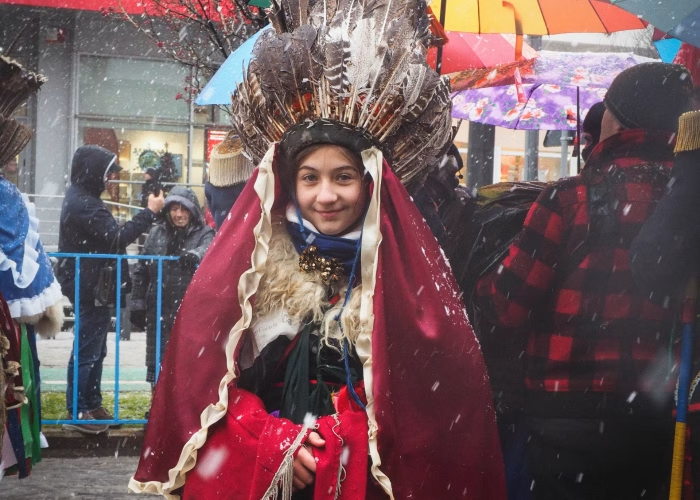
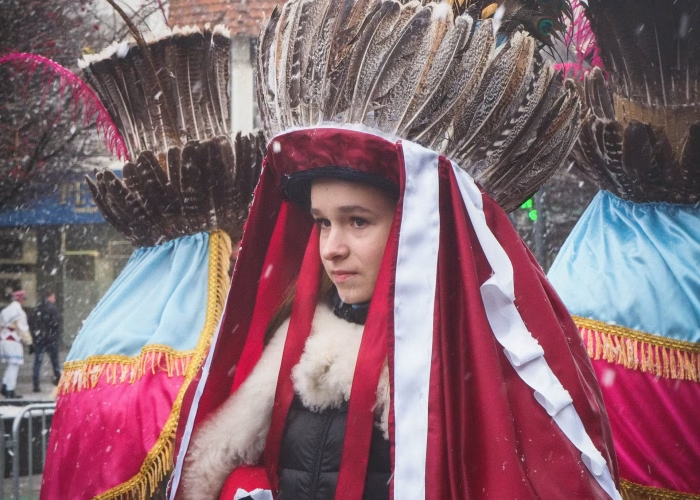
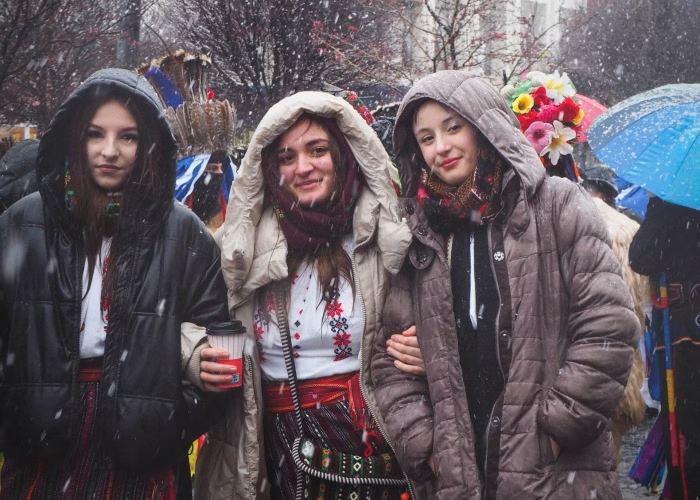
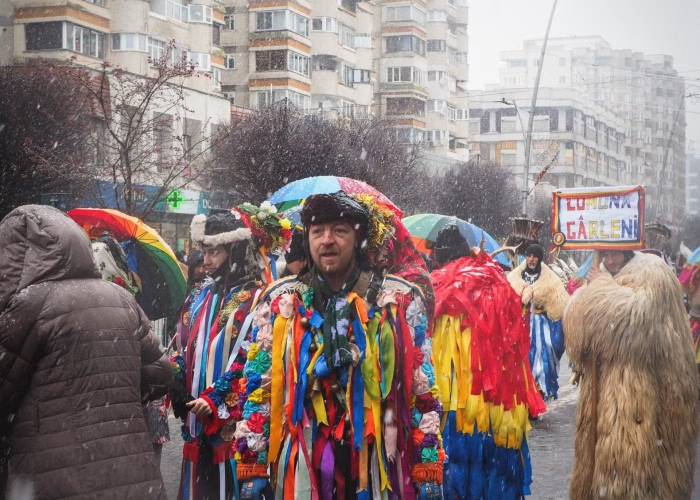
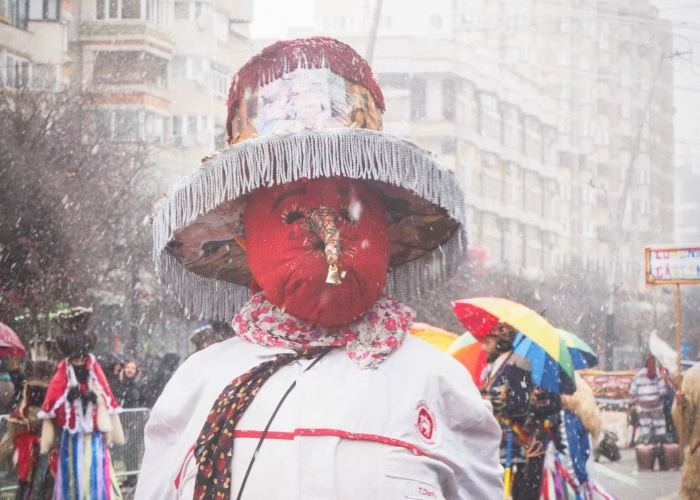
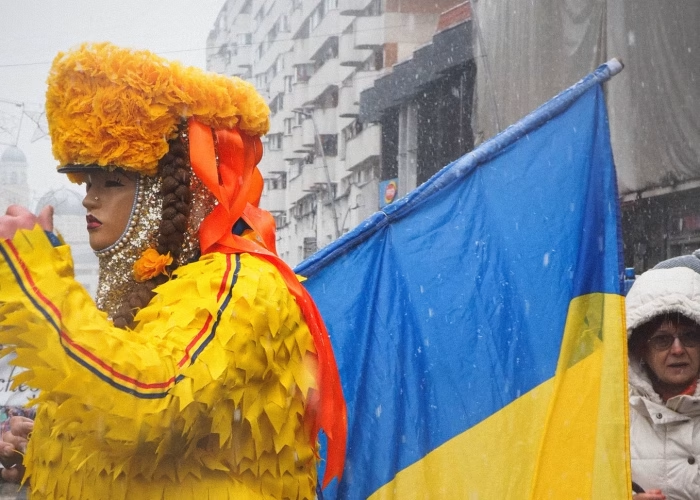
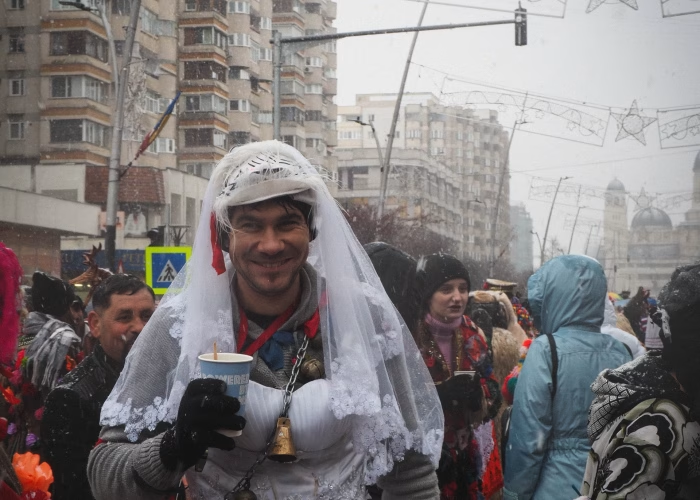
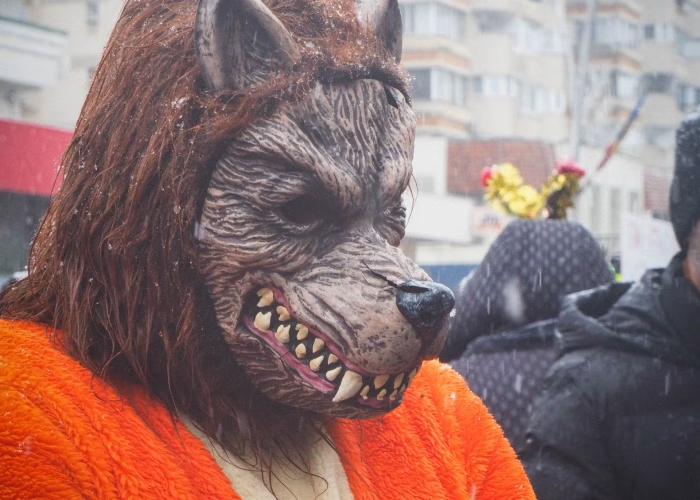
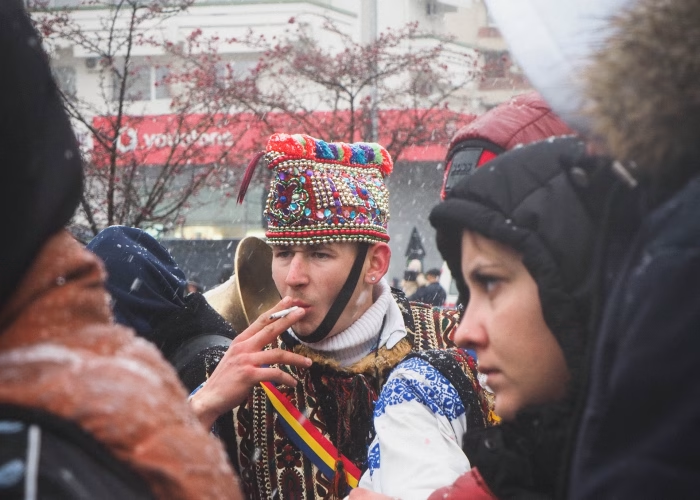
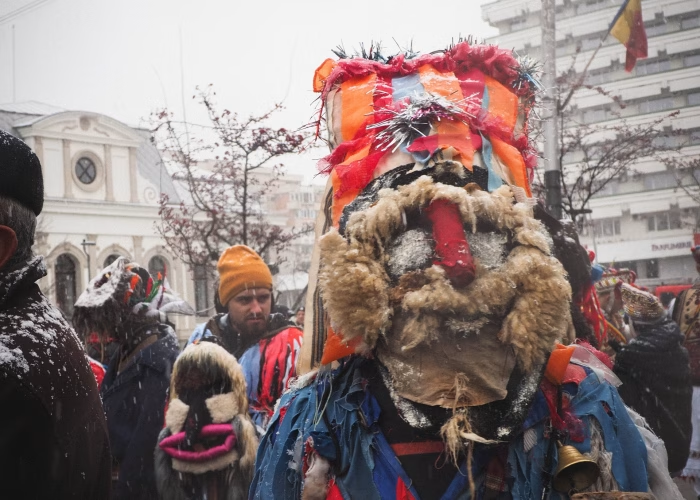
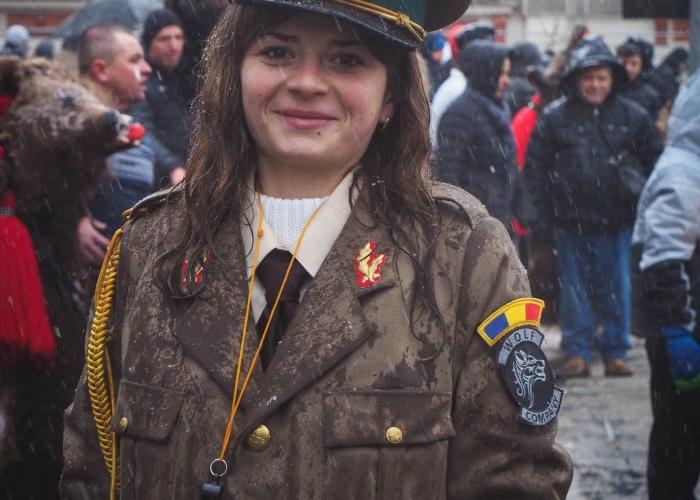
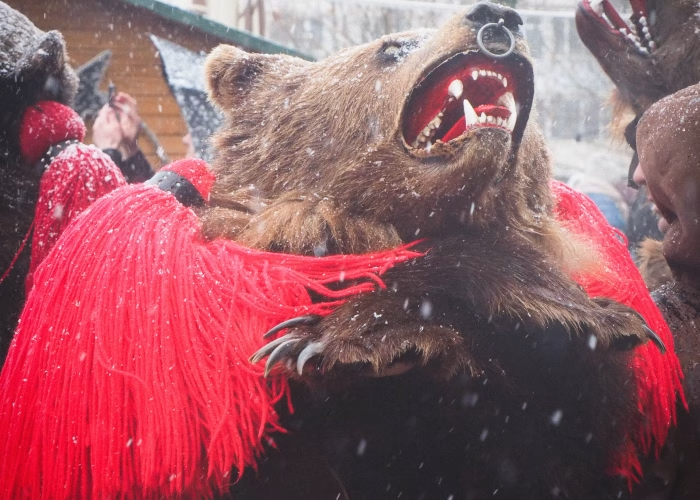
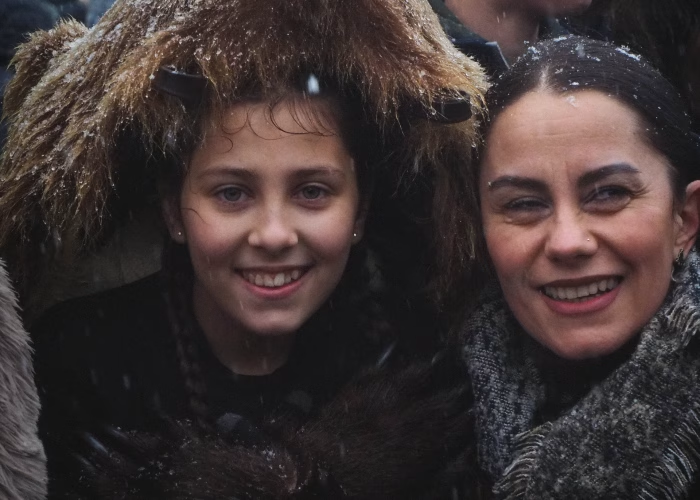
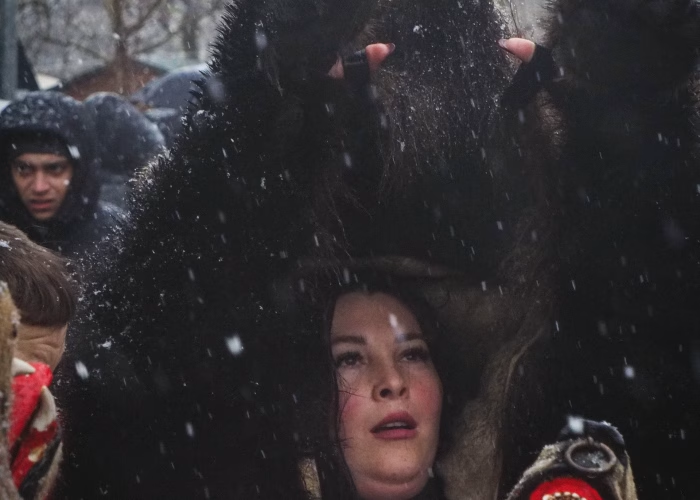
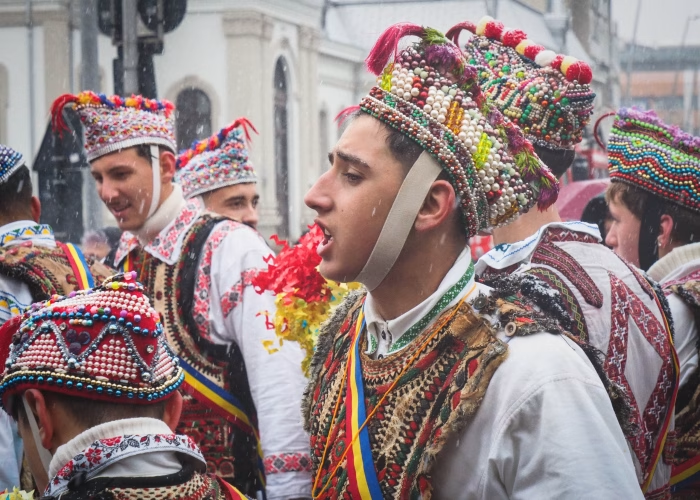
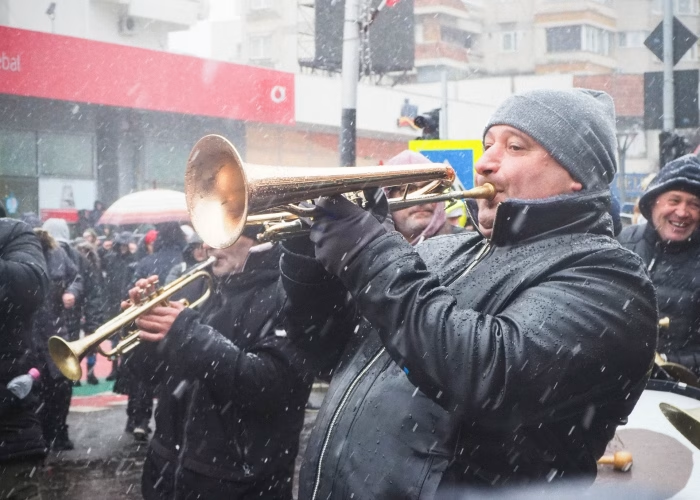
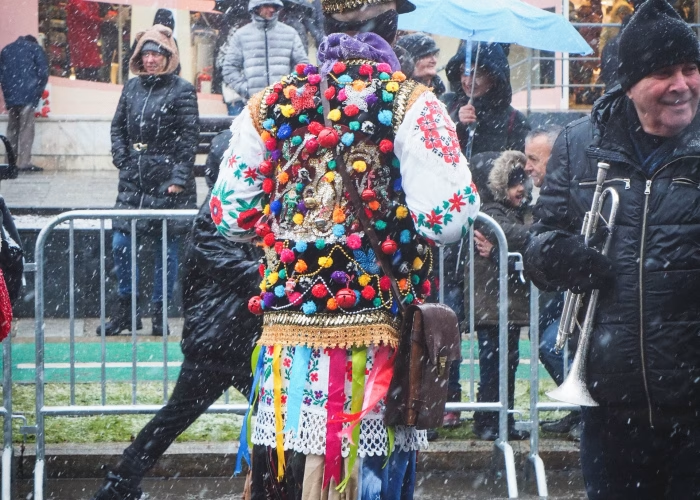
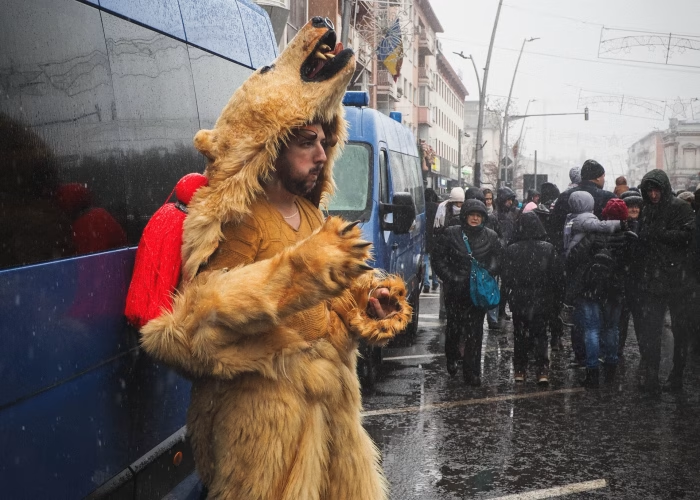
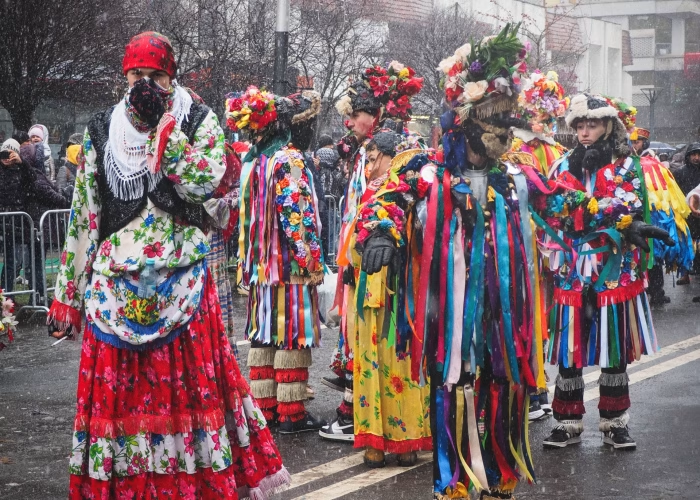
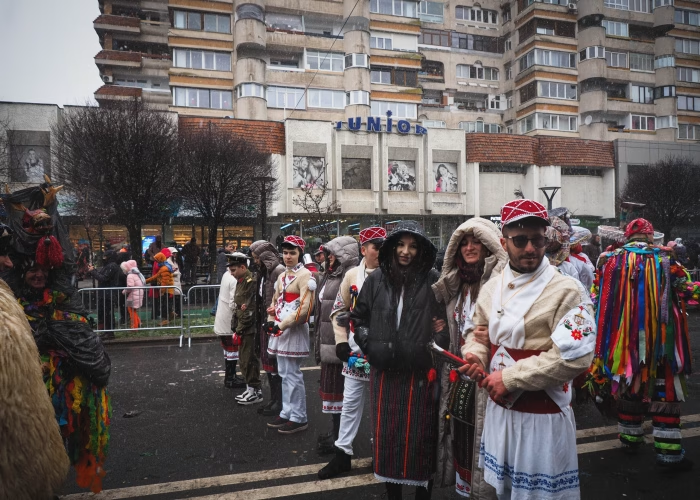
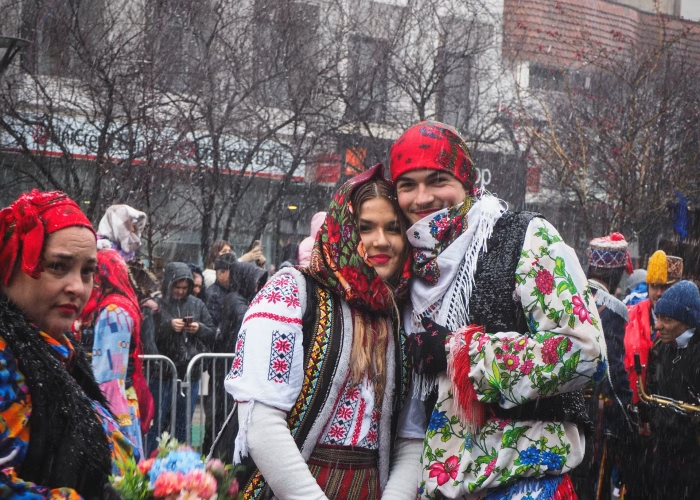
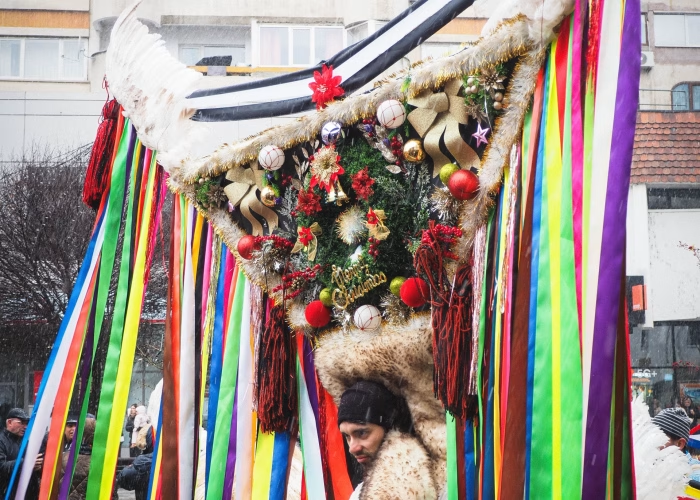
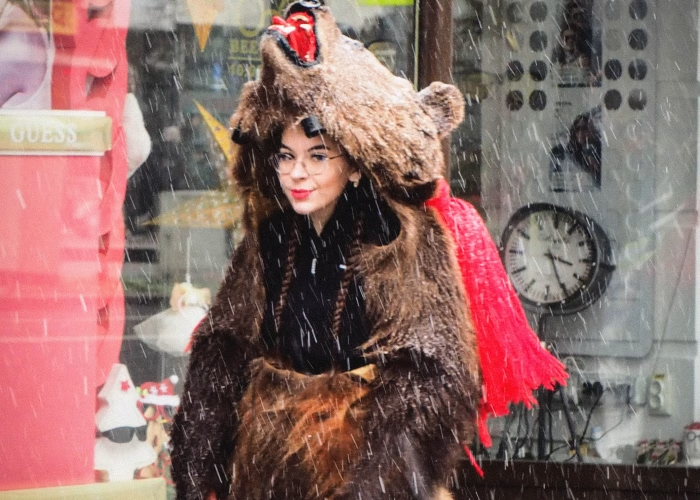
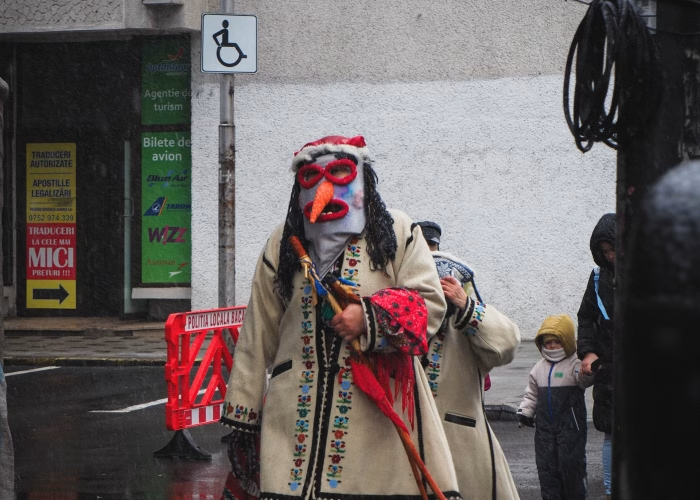
December 2024, “The Parade of Winter Customs and Traditions” in the municipality of Bacău – © Daniel Olteanu, with thanks
Romanians in a Nutshell
If you want to understand Romanians, look past the people you’ll meet in Bucharest cafés or in Transylvanian villages – peek into two psychology books written more than a century apart. In 1907, professor Dumitru Drăghicescu published The Psychology of the Romanian People in a newly independent kingdom still trying to shake off Ottoman and Phanariot habits. He found us charmingly inconsistent: clever and inventive as individuals, but hopelessly suspicious, disorganized, and in need of strong leaders. Fast forward to 2015, when professor Daniel David released his own Psychology of the Romanian People, after Romania had already joined NATO and the EU. His scientific, data-driven verdict? We’re still… clever and inventive as individuals, but hopelessly suspicious, disorganized, and in need of stronger institutions.
So don’t be surprised if your Romanian host solves any problem with dazzling creativity, yet curses the state while doing it. History may have gifted us resilience – surviving empires, wars, communism, and bureaucracy – but it also left us with a reflex of mistrust and a taste for short-term improvisation. In short: for over a hundred years, the textbooks say we haven’t changed much. Which is either tragic or hilarious – but at least it makes us authentic, and, let’s admit it, never boring.
If you ask a Romanian about their country, you’ll often hear two opposite answers in the same breath: “This place is hopeless” followed by “This is the most beautiful place on earth.” That’s not schizophrenia, it’s our national sport – complaining with passion while showing off with pride. We adore our poets, curse our politicians, romanticize our countryside, and improvise our way through city traffic. The coffee might arrive late, but the smile that comes with it will make you forgive anything.
And if you wonder how this paradox survives through the centuries, the answer is simple: adaptability. From shepherding sheep across the Carpathians to coding in tech hubs today, Romanians thrive when thrown into chaos. The institutions may wobble, but the people will find a way – usually with humor, a touch of fatalism, and a brilliant “hack.” That’s why when you visit, you’ll find a society where frustration and warmth coexist, where skepticism fuels creativity, and where the best travel stories are usually born from the unexpected.

Romania, like anywhere else, has its ugly sides too. Antisemitism, homophobia, and a loud strain of ultra-conservatism still echo in parts of society. Racism—especially toward the Roma community—remains a painful, unresolved issue, with prejudice and exclusion woven into daily life. Corruption clings stubbornly to politics and institutions, feeding mistrust and cynicism. Rural poverty, poor infrastructure, and underfunded services stand in stark contrast to glittering city malls and booming IT hubs. And while Romanians are famously warm to guests, among themselves inequality, discrimination, and a reflex of suspicion can fray the social fabric. It’s part of the paradox: a land of immense beauty and resilience, but also of wounds not yet healed. It takes a lifetime to understand it.
Romania is generally safe for tourists and reasonably supportive of equal rights—but differences remain:
Women: Safe from external threats, yet face serious challenges from domestic violence.
Minorities: Inclusive laws exist, with official agencies like the CNCD able to enforce them.
LGBTQ+ Community: Rights lag behind most EU peers; however, increased visibility, Pride turnout, and legal pressure show gradual progress.
Hate Speech & Extremism: Strengthened legislation marks a step forward—but raises questions about enforcement and long-term cultural change.
Best Movies about Romania
The Death of Mr. Lăzărescu (2005, dir. Cristi Puiu) – Dark comedy about a man shuffled through hospitals, exposing both compassion and institutional absurdity.
Tales from the Golden Age (2009) – Blackly comic vignettes of life under late communism, blending myth, irony, and everyday survival.
12:08 East of Bucharest (2006, dir. Corneliu Porumboiu) – deadpan, somber, yet laugh-out-loud satire comparing reality to perception during a historical turning point for Romania.
Philanthropy (Filantropica, 2002, dir. Nae Caranfil) – A biting satire of scams, manipulation, and cynicism in modern Bucharest.
Best Documentaries
Collective (2019, dir. Alexander Nanau) – Oscar-nominated investigation into corruption after the Colectiv nightclub fire.
Untamed Romania (2018) – Stunning nature documentary about the Carpathians and Danube Delta.
Wild Carpathia (2011, dir. Charlie Ottley) – Travel series showcasing rural traditions, natural beauty, and Romanian resilience.
- Flavors of Romania – Netflix docuseries starring and guided by Charlie Ottley (again), offering a road-trip-style exploration of Romania’s rich heritage and scenery.
Top 3 Plays
O scrisoare pierdută (A Lost Letter, 1884, Ion Luca Caragiale) – Classic comedy of political chaos and petty rivalries, still painfully relevant.
O noapte furtunoasă (A Stormy Night, 1879, Ion Luca Caragiale) – Farce poking fun at bourgeois pretensions and national vanity.
Oedipe (1936, George Enescu) – Monumental opera blending myth, philosophy, and Romanian musical identity.
Best Classical Music
George Enescu – Romanian Rhapsody No. 1 (1901) – A vibrant orchestral showpiece rooted in folk dances.
Ciprian Porumbescu – Ballad for Violin (1880) – Romantic, lyrical, melancholic beauty.
Dinu Lipatti – Chopin Waltz in A-flat major, Op. 34 No. 1 (1947 recital)
Romanian Sportspeople and celebrities
Nadia Comăneci – Legendary gymnast, first to score a perfect 10 at the Olympics (Montreal 1976).
Simona Halep – Former World No. 1 tennis player, Wimbledon & Roland Garros champion.
Ilie Năstase – Tennis legend, flamboyant star of the 1970s, first ATP World No. 1.
Gheorghe Hagi – Football superstar, nicknamed “The Maradona of the Carpathians.”
Sebastian Stan – Hollywood actor (Captain America, Pam & Tommy), born in Constanța.
Anamaria Marinca – Actress in the Palme d’Or winner 4 Months, 3 Weeks and 2 Days and international series (The Last Enemy).
Florin Piersic Jr. – Known in Europe for indie films and theatre.
Maia Morgenstern – Internationally recognized actress (The Passion of the Christ as Mary).
Marcel Iureș – Veteran Romanian actor, appeared in Mission Impossible, The Peacemaker, Interview with the Vampire.
Romanian Inventors and Innovators
- Henri Coandă (1886–1972) – Inventor of the jet engine concept (Coandă-1910), aerodynamics pioneer, and discoverer of the Coandă Effect.
- Traian Vuia (1872–1950) – Aviation pioneer, built one of the world’s first heavier-than-air, self-propelled airplanes (1906).
- Aurel Vlaicu (1882–1913) – Engineer and early aviator; designed and flew his own planes in the early 1910s.
- Elie Carafoli (1901–1983) – Aerospace engineer, worked on jet aircraft design; member of the Romanian Academy, his work influenced post-WWII aviation.
- Nicolae Paulescu (1869–1931) – Physiologist who discovered insulin (his work predated the Canadian patent-holders but was less recognized at the time).
- Petrache Poenaru (1799–1875) – Inventor of the modern fountain pen (patented in 1827 in France).
- Gogu Constantinescu (1881–1965) – Engineer, founder of sonics (the theory of transmitting energy through vibrations), contributed to hydraulic and sonic technologies.
- Spiru Haret (1851–1912) – Mathematician, physicist, and astronomer; innovator in mechanics of celestial bodies and modern Romanian education reformer.
- Victor Babeș (1854–1926) – Biologist, one of the founders of modern bacteriology; discovered over 50 germs and introduced rabies vaccination in Romania.
- Anastase Dragomir (1896–1966) – Aviation engineer, inventor of an early version of the ejection seat (1920s–1930s).