
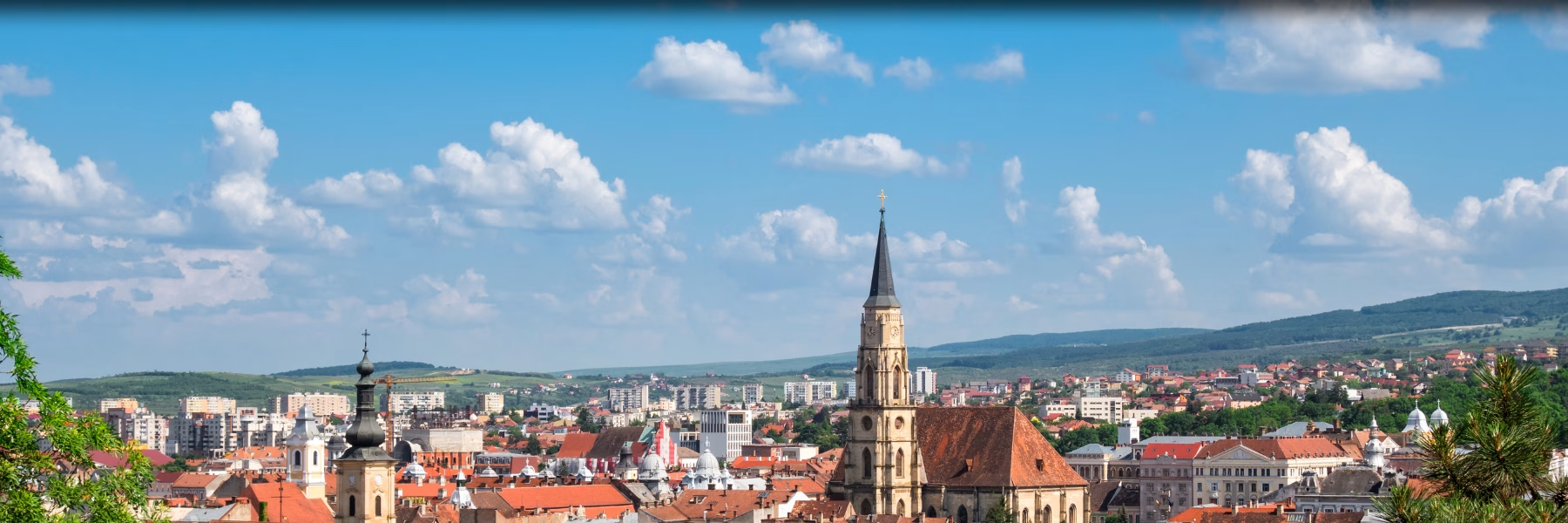
What to See in Romania
For more than a century, our sociologists and philosophers have been trying to find a definition for the Romanian spirit. It’s fragmented, differing from situation to situation, it is built through quite a lot of suffering and rarely through trust in others (especially not in state institutions).
In 1907, Dumitru Drăghicescu asked the educated to “discover all the bad, abnormal, deviant traits of the Romanian soul, and seek to correct them… and to follow the source of these habits and bad traits, as well as the good traits we display.” A hundred years on, Daniel David puts it bluntly: “What matters is how we relate to [these traits]; denying them discredits us, and exaggerating them compromises us.” That’s our north star here.
So we’ll guide you with three lenses: The Good, The Bad, and The Ugly.
- The Good is the easy love—mountain roads spun across the Carpathians, painted monasteries that glow even on grey days, wooden churches, Saxon towns, fish soup at the Delta, a glass of Fetească when the sun drops behind the hills—natural beauty, living traditions, and heritage that draw people here.
- The Bad is the hard ground—Holocaust sites, prisons, forced-labor camps—so travel doesn’t gloss over victims or history. There is no end to human suffering, and Romania has seen its share of it, often dealt against its most visible minorities.
- The Ugly is the country’s unvarnished face—brutalist slabs, systematized villages, the Revolution’s memorials, and the messy transition that followed—because these shape daily life today. The almost surreal chaos of the Balkans finds a very sharp and dangerous edge when ground against the heavy stone of Communism.
Seeing through all three lenses builds context, empathy, and curiosity; it turns a checklist of sights into a story with depth. Walk it all. Celebrate what deserves joy, sit with what demands grief, and don’t flinch from the concrete in between. The point isn’t to tidy Romania into a postcard; it’s to let the postcard breathe—to meet a place that is beautiful, wounded, inventive, and very much alive. As you explore, please treat memorials with care, sacred places with respect, and communities as hosts rather than backdrops.
Crash Course in Romanian History
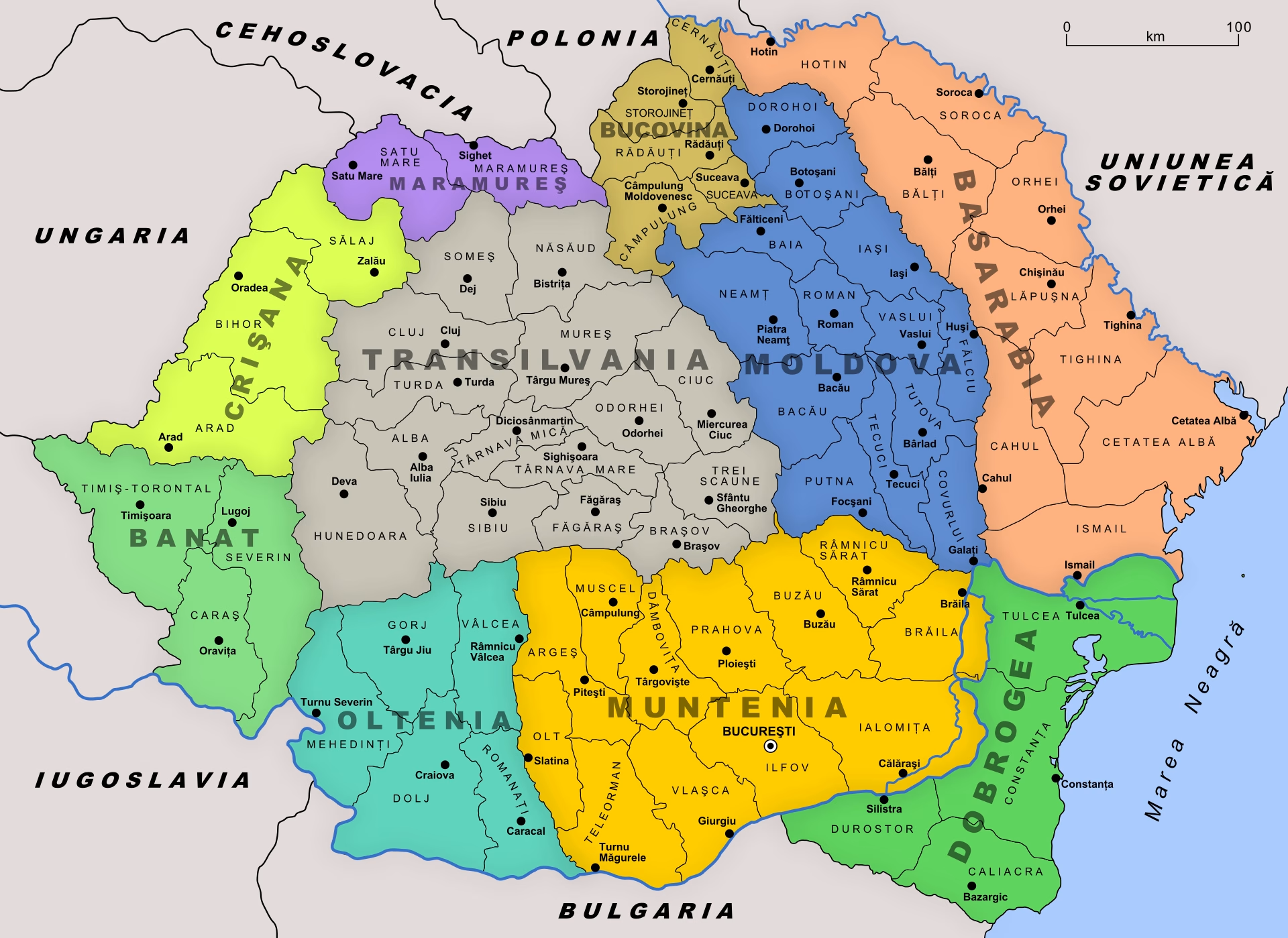
Romania’s history is that of a frontier land, caught at the meeting point of empires. Through the Middle Ages, the lands beyond the Carpathians split between Muntenia (Wallachia) and Moldavia—Orthodox, agrarian, and often bound to the Ottoman Porte—while Transylvania lay under the sway of the Hungarian Crown and later the Habsburgs, layered with Hungarian nobles, Saxon colonists, and Romanian peasants. The long-cherished vision of unity took shape in 1918, at the close of the First World War, when Transylvania, Bukovina, and Bessarabia joined the Romanian Kingdom to create “Greater Romania.” Yet that union proved fragile: the Second World War and redrawn borders stripped away territories, and by 1947 the monarchy itself had fallen, replaced by a Communist regime that imposed decades of censorship, privation, surveillance, and Ceaușescu’s grandiose tyranny. The bloody Revolution of 1989 ended the dictatorship, opening the path toward democracy, European integration, and the unfinished struggle to define Romania’s place in the modern age.
Romania is divided into a number of historical regions. One of these is Basarabia, now the independent Republic of Moldova. Step into Transylvania and it can feel like you’ve crossed into Central Europe, with fortified Saxon churches, baroque towns, and mountain villages that once belonged to another world. Travel south into Muntenia, and you’ll taste the long Ottoman influence in every slow-cooked stew and spiced dish, flavors that lingered after centuries of rule. Cross into Moldavia, and the rhythm slows, with monasteries painted like illuminated manuscripts under the open sky. This is the land you walk into — shaped by borders carrying a common thread of resilience.
The result? Romania is a place of striking contrasts. There are breathtaking sights that belong among Europe’s finest, but just as many haunting reminders of a difficult past. And while Bucharest is often the first stop, it’s not always the best introduction. The capital has its share of beauty—the Atheneum, museums, nightlife, the bustle along Victory Boulevard—but it also carries a heavy dose of the Ugly. To really understand Romania, you have to wander beyond the capital’s edges, into the villages, towns, and mountains where history’s layers are still visible and alive. But make no mistake, this is Europe at its finest.
Four Trips to Discover Romania (and Moldova)
Short Trip (2–3 Days)
Base: Brașov (fly into Brașov or Cluj depending on flights).
Day 1: Explore Brașov’s medieval center — Council Square, Black Church, Rope Street, and a climb up Tâmpa Mountain for sweeping views.
Day 2: Day trip options:
• Saxon fortified churches at Prejmer or Hărman (authentic and crowd-free).
• Poenari Castle if you’re Dracula-curious — Vlad’s real stronghold, reached by 1,400 steps.Day 3: Morning stop at Peleș Castle in Sinaia, one of Europe’s great royal palaces. Return for departure.
(If you insist on Bran, go ahead — but it’s a tourist trap. Better to spend time with the Saxon heritage.)
Medium Trip (4–5 Days)
Route: Bucharest → Sinaia → Brașov → Sighișoara → Sibiu.
Day 1: Bucharest contrasts: lively Old Town cafés and Belle Époque mansions vs. Ceaușescu’s heavy legacy (Palace of Parliament, grand boulevards).
Day 2: Stop at Peleș Castle in Sinaia, then continue to Brașov for an evening walk through medieval streets.
Day 3: Day trip to Sighișoara, a perfectly preserved citadel. Stop at Viscri, the iconic Saxon fortified village.
Day 4: Drive to Sibiu, a city of towers and pastel houses with “eyes.”
Day 5: Morning in Sibiu — Brukenthal Palace, ASTRA folk museum — before departure via Sibiu, Cluj, or Bucharest.
Long Trip (7–10 Days)
Route: Bucharest → Sinaia → Brașov → Sighișoara → Sibiu → Cluj-Napoca → Maramureș → return via Cluj or Bucharest.
Day 1: Bucharest — Old Town’s buzz versus Ceaușescu’s scars.
Day 2: Sinaia — Peleș Castle, overnight in Brașov.
Day 3: Brașov surroundings — Prejmer/Hărman Saxon churches, or Poenari Castle climb.
Day 4: Sighișoara — full medieval immersion.
Day 5–6: Sibiu — grand squares and Biertan fortified church. In summer, drive the spectacular Transfăgărășan Highway; off-season, use the scenic Olt Valley.
Day 7–8: Cluj-Napoca — student city with nightlife, plus Turda Salt Mine underground.
Day 9–10: Maramureș — wooden churches, carved gates, timeless village life. End via Cluj or Bucharest.
Extended Trip (15 Days) — Dobrogea, Danube Delta, Moldova & Bucovina
Route: Bucharest → Constanța/Dobrogea → Enisala → Danube Delta → Moldova (Chișinău) → Iași → Bucovina → Bicaz Gorges → return.
Day 1–2: Bucharest → Constanța. Black Sea seafront, Roman mosaics, Ottoman-Greek traces.
Day 3: Enisala Fortress & Dobrogea Hills. Overnight in Tulcea.
Day 4–5: Danube Delta boat tours — pelicans, reed canals, fishing villages. Stay in a guesthouse.
Day 6: Drive north via Galați, cross into Moldova. Evening in Chișinău.
Day 7–8: Moldova — Chișinău’s Soviet boulevards and Orthodox churches, plus world-class wineries Cricova/Mileștii Mici. Optional Orheiul Vechi cave monastery.
Day 9: Return to Romania, overnight in Iași.
Day 10: Iași — Palace of Culture, Copou Park, historic monasteries.
Day 11–13: Bucovina monasteries (Voroneț, Humor, Sucevița, Moldovița, Arbore) with village stays.
Day 14: Scenic Bicaz Gorges → Red Lake. Overnight in the Carpathians.
Day 15: Long drive back to Bucharest or Cluj/Sibiu.
Logistics
Car rental: most agencies forbid or restrict cross-border to Moldova; plan to return the car in Galați/Tulcea and pick up again in Iași after you’re back in Romania.
Some providers with official cross-border policies:
• Sixt Romania (Moldova not in permitted list) •
Avis Romania (cross-border surcharge, permission required) •
Autonom (written approval needed) •
Romania Rent a Car – Iași (explicit Moldova option)Border crossing: allow patience (1–3 hours).
Romanian Tourism Map
Romania — Route from Bucharest
The Good
Natural wonders
Danube Delta – UNESCO wetland maze of canals and lakes; pelicans, reed villages, boat trips. Google Maps
Cazanele Dunării (Iron Gates Gorge) – Sheer limestone walls squeezing the Danube; boat trips and cliffside viewpoints. Google Maps
Făgăraș Mountains – Highest Carpathian ridge hikes, glacier lakes, wild scenery. Google Maps
Retezat National Park – “Jewel of the Carpathians” with 80+ glacial lakes. Google Maps
Apuseni Mountains – Caves, gorges, karst plateaus, time-capsule villages. Google Maps
Oltenia de sub munte – Orchard hills, ridge villages, wooden churches and caves along the Southern Carpathians. Google Maps
Transfăgărășan Road – Iconic high-alpine drive of hairpins and views. Google Maps
Transalpina Road – Romania’s highest paved road, vast panoramas. Google Maps
Turda Gorge – Sheer limestone cliffs for hiking & climbing. Google Maps
Bicaz Gorge & Red Lake – Dramatic canyon beside a landslide-formed lake. Gorge | Lake
Turda Salt Mine – Surreal underground park: boats, amphitheater, Ferris wheel. Google Maps
Slănic Prahova Salt Mine – Cathedral-sized salt chambers, therapy & tours. Google Maps
Cheile Dobrogei (Dobrogea Gorges) – Fossil-reef cliffs from an ancient sea; short scenic drives/walks. Google Maps
Canaralele Hârșovei – Jurassic limestone “canarale” above the Danube; big views and a local “Sfinx” rock. Google Maps
Canaraua Fetii – Wild canyon near the border, dotted with caves and legends. Google Maps
Ostrovul Șoimul (Danube island) – Small protected island of birds and willow thickets. Google Maps
Caves
Scărișoara Ice Cave – 3,000-year-old underground glacier. Google Maps
Peștera Urșilor (Bear Cave) – Fossil-rich cavern with striking formations. Google Maps
Peștera Polovragi (Gorj) – Easy show-cave under Parâng with legends and dripstone halls. Google Maps
Peștera Muierii (Baia de Fier) – Classic show-cave; prehistoric finds and large chambers. Google Maps
Peștera Meziad (Bihor) – Vast cave with underground rivers and tall galleries. Google Maps
Peștera Dâmbovicioara (Argeș) – Short, family-friendly cave at the mouth of a karst gorge. Google Maps
Sea, lagoons & the Delta
Jurilovca (Dobrogea) – Lipovan fishing village; boats to lagoon and sea. Google Maps
Gura Portiței – Boat-in strip of sand between lagoon and Black Sea. Google Maps
Topalu & the Dinu și Sevasta Vintilă Art Museum – Tiny Danube village with a heavyweight rural art museum. Google Maps
Black Sea Coast – From lively resorts to bohemian beaches. Mamaia | Constanța Casino | Vama Veche
Long-distance trail
Via Transilvanica – 1,400+ km cultural route from Bucovina to the Danube, crossing villages, forests, and heritage sites. Google Maps
Historic towns, villages & districts
Sibiu – Saxon old town, pastel squares, towers. Google Maps
Brașov – Medieval core, Tâmpa views, Black Church. Google Maps
Sighișoara – UNESCO hilltop citadel, colorful houses. Google Maps
Cluj-Napoca – Youthful Transylvanian hub with Gothic landmarks. Google Maps
Alba Iulia – Star-shaped Vauban citadel, unification site. Google Maps
Timișoara – Viennese squares; cradle of the 1989 Revolution. Google Maps
Oradea – Art Nouveau jewel; Black Eagle Palace. Google Maps
Maramureș Villages – Wooden churches, carved gates, living traditions. Google Maps
Viscri – Saxon village with fortified church, favored by HM King Charles III. Google Maps
Ciocănești (Bucovina) – Houses painted with folk motifs. Google Maps
Bucharest Historic Center – Lipscani lanes, Calea Victoriei, Belle Époque facades. Google Maps
Iași City Center – Palatul Culturii skyline, Copou, grand churches and student buzz. Google Maps
Săvârșin Castle (Arad County) – The Royal Family’s country estate; landscaped park and workshops, with visits on select dates. Google Maps
Castles, fortresses & ruins
Peleș Castle (Sinaia) – Neo-Renaissance royal palace with exquisite interiors. Google Maps
Pelișor Castle (Sinaia) – Art-Nouveau/Jugendstil jewel beside Peleș. Google Maps
Bran Castle – Hilltop fortress often a tourist trap linked to the Dracula legend; still photogenic and fun when timed off-peak. Google Maps realromania.info
Corvin Castle (Hunedoara) – Dramatic Gothic stronghold with working drawbridge. Google Maps
Râșnov Fortress – Hilltop citadel guarding Carpathian passes. Google Maps
Făgăraș Fortress – Renaissance bastion with moat. Google Maps
Deva Fortress – Ruined hillfort with sweeping views. Google Maps
Enisala Fortress (Dobrogea) – Genoese ruins over lagoons. Google Maps
Poenari Fortress – Vlad Țepeș’s mountain eyrie—lots of steps but epic ridge views. Google Maps realromania.info
Sarmizegetusa Regia – Dacian sacred capital (UNESCO) with small on-site dioramas; forested stone circles and terraces. Google Maps realromania.info
Ulpia Traiana Sarmizegetusa – Roman provincial capital ruins. Google Maps
Histria – Ancient Greek city on the Black Sea. Google Maps
Turnul Chindiei (Târgoviște) – Princely watchtower over the old Wallachian court. Google Maps
Tropaeum Traiani / Adamclisi – Triumphal monument, Roman town and museum on a windswept plateau. Google Maps
Capidava Fortress (Danube) – Roman–Byzantine stronghold above the river. Google Maps
Carsium (Hârșova) – Roman/medieval citadel controlling a Danube bend. Google Maps
Ulmetum (Pantelimonu de Sus) – Late-Roman triangle fort with basilica remains. Google Maps
Cetatea Pătulului (Rasova) – Frontier fort tied to Constantine’s limes. Google Maps
Sacidava (Aliman) – Roman–Byzantine riverside castrum guarding Danube routes. Google Maps
Getic hillfort at Dunăreni – Pre-Roman hillfort above lake and steep slopes. Google Maps
Păcuiul lui Soare / Vicina – Partly sunken medieval port city on a Danube island. Google Maps
Churches, monasteries & pilgrimage
Putna Monastery – Stephen the Great’s resting place. Google Maps
Voroneț Monastery – “Sistine Chapel of the East” (famous blue). Google Maps
“Mănăstirile din Bucovina” (ensemble) – Painted-monasteries circuit: Voroneț, Sucevița, Humor, Moldovița, Arbore. Google Maps
Black Church, Brașov – Gothic landmark with famous organ and carpets. Google Maps
Densuș Church – Ancient stone church built with Roman blocks. Google Maps
Trei Ierarhi (Iași) – Stone-lace facades and gilded interiors; Moldavian Baroque at its peak. Google Maps
Biserica Amzei (Bucharest) – Neo-Brâncovenesc city church with handsome brick-and-stone work. Google Maps
Budești-Josani Wooden Church (Maramureș) – Slender spire and shingled roof—UNESCO-listed style. Google Maps
Șumuleu Ciuc Sanctuary – Massive Pentecost pilgrimage site in the Ciuc valley. Google Maps
Stavropoleos Monastery (Bucharest) – Brâncovenesc jewel in the capital. Google Maps
Curtea de Argeș Monastery – Royal necropolis with intricate stonework. Google Maps
Cozia Monastery – 14th-century foundation of Mircea the Elder. Google Maps
Snagov Monastery – Island monastery linked to Vlad Țepeș. Google Maps
Wooden Churches of Maramureș (ensemble) – Towering, shingled spires across the region. Google Maps
Fortified Churches of Transylvania (ensemble) – Saxon village churches ringed by walls and towers (e.g., Biertan). Google Maps
Merry Cemetery (Săpânța) — Brightly painted wooden crosses with witty epitaphs; living folk art in Maramureș. Google Maps
The Bad
WWII & the Holocaust
Holocaust Memorial (Bucharest) — Stark national monument to victims of the Holocaust in Romania. Google Maps
Jewish History Museum (Bucharest) — Intimate museum of Jewish life and loss (Str. Mămulari). Google Maps
Elie Wiesel Memorial House (Sighetu Marmației) — Museum in the Nobel laureate’s childhood home. Google Maps
Iași Pogrom Museum — Dedicated to the June 1941 pogrom; testimony and documents. Google Maps
Iași Pogrom Memorial — Outdoor memorial for massacre and “death-train” victims. Google Maps
Great Synagogue of Iași — Oldest surviving synagogue in Romania; a quiet witness to 1941. Google Maps
Cluj-Napoca Deportees’ Memorial (CFR station area) — Stone markers recalling the 1944 deportations. Google Maps
Oradea — Synagogue & Holocaust Memorial — Restored synagogue and exhibits on the community’s destruction. Google Maps
Moisei Monument (Maramureș) — Géza Vida’s hillside memorial to the 1944 massacre of villagers. Google Maps
Communist Prisons & Labor Camps
Sighet Prison Memorial — Romania’s flagship museum of communist repression. Google Maps
Cimitirul Săracilor (Sighet) — Cemetery-meadow and memorial for prisoners who died at Sighet. Google Maps
Pitești Prison Memorial — Interprets the infamous 1949–51 “re-education” experiment. Google Maps
Jilava — Fort 13 — Former military fort turned detention and execution site. Google Maps
Râmnicu Sărat Prison (“prison of silence”) — Extreme isolation regime; now a memorial project. Google Maps
Doftana Prison (Telega) — Interwar/communist prison, long abandoned; haunting shell. Google Maps
Aiud — Calvarul Aiudului (Râpa Robilor) — Striking hilltop memorial above prisoners’ burial ground. Google Maps
Gherla — Cemetery of Political Prisoners (Cărămidărie) — Memorial space for victims of the Gherla system. Google Maps
Periprava Labor Camp (Danube Delta) — Remote former forced-labor site; no formal museum. Google Maps
Danube–Black Sea Canal (Poarta Albă memorial) — Megaproject built with forced labor; memorial cross at Poarta Albă. Google Maps
Deportations to Bărăgan (Timișoara memorial) — Monument and reconstructed “deportee” homes recalling the 1951 relocations. Google Maps
Elie Wiesel Memorial House (Sighetu Marmației) — Museum in the Nobel laureate’s childhood home; exhibits on Maramureș Jewish life and the Holocaust. Google Maps
The Ugly
Ceaușescu’s Projects & Brutalist Landmarks
Palace of Parliament (Bucharest) – Colossal “House of the People.” Google Maps
Civic Center / Bulevardul Unirii – Socialist grand boulevard replacing old quarters. Google Maps
Casa Scânteii (Press House) – 1950s Stalinist press HQ. Google Maps
Hotel Intercontinental (Grand Hotel Bucharest) – 1970s modernist icon over University Square. Google Maps
National Theatre (TNB) – Rebuilt concrete modernism downtown. Google Maps
Bucharest Housing Estates – Uniform panel blocks from forced urbanization. Pantelimon | Titan | Militari
Scornicești (systematization) – Model town experiments in Ceaușescu’s birthplace. Google Maps
1989 Revolution & Memory Sites
Timișoara Revolution Memorial – Monuments to the uprising that started the fall. Google Maps
Heroes’ Cemetery (Bucharest) – Graves of those killed in December 1989. Google Maps
University Square (Bucharest) – Epicenter of the 1989 protests and 1990 clashes. Google Maps
Palace Balcony (final speech) – Site of Ceaușescu’s last address. Google Maps
- Sion Neolog Synagogue (Oradea) — Moorish-Revival landmark on the Crișul Repede, restored as a cultural venue and museum. Google Maps
Post-Communist Transition & Decay
Hunedoara Steelworks Ruins – Industrial giant turned rustscape. Google Maps
Petroșani Coal Mines (Jiu Valley) – Abandoned shafts and mining towns. Google Maps
Galați Industrial Zone – Half-abandoned factories along the Danube. Google Maps
Piața Victoriei (Bucharest) – Government square and epicenter of the 2017–2019 anti-corruption protests. Google Maps
Colectiv Club Memorial (Bucharest) – Site of the 2015 fire; a touchstone for civic awakening and safety reforms. Google Maps
Dragonul Roșu Wholesale (Afumați, Ilfov) – Vast market city of the transition economy; cash-and-carry labyrinth. Google Maps
Europa Market (Dobroești) – One of the early post-’90s bazaars; informal trade gone semi-formal. Google Maps
Obor Market (Bucharest) – Old-school market that bridged the ’90s bazaar era and today’s regulated retail. Google Maps
Lipscani / Old Town (Bucharest) – From derelict to nightlife hub; a case study in fast gentrification. Google Maps
Buzescu “Palaces” (Teleorman) – Ornate Roma mansions lining DN6; emblematic of new wealth aesthetics. Google Maps
Văcărești Nature Park (Bucharest) – Failed reservoir turned “urban delta” by citizen activism. Google Maps
RAFO Onești Refinery (Bacău) – Decommissioned refinery; rustscape of privatization and collapse. Google Maps
Călan Steel Works (Hunedoara) – Hulking furnaces and cooling towers; textbook industrial ruin. Google Maps
Reșița Steel Works (Caraș-Severin) – Remains of an industrial giant beside a city reinventing itself. Google Maps
Petrila Coal Mine (Jiu Valley) – Closed mine reimagined as arts/memory site (Planeta Petrila). Google Maps
Lupeni & the Jiu Valley Mining Towns – Shrinking pits, proud unions, hard transitions. Google Maps
Roșia Montană (Alba) – Gold-mining town turned heritage/activism landmark; UNESCO-listed landscape. Google Maps
Historical Baths Ruins (Băile Herculane) – Austro-Hungarian spa gems in varying states of decay and rescue. Google Maps